
Why Your Chronic Headaches Aren't JUST a Head Problem
The jaw, neck, and vision connection that keeps issues like chronic headaches coming back

If you have been dealing with recurring headaches for months, or even years, you have probably heard the same explanations on repeat.
Stress. Dehydration. Tension.
Maybe you have tried medication, seen a neurologist, visited a chiropractor, or gone through rounds of physical therapy. Maybe things got a little better for a while. Or maybe nothing changed at all.Here is what most people are never told. Your headaches may have very little to do with your head.
As a Certified Athletic Trainer and Postural Restoration specialist, I work with people who have been managing headaches for years without ever getting to the real source of why they keep happening. And in nearly every case, when we start looking at the whole system, the same things keep showing up. The jaw. The neck. The eyes. The vestibular system. And sometimes, something as overlooked as histamine. Not as separate problems. As one connected loop.
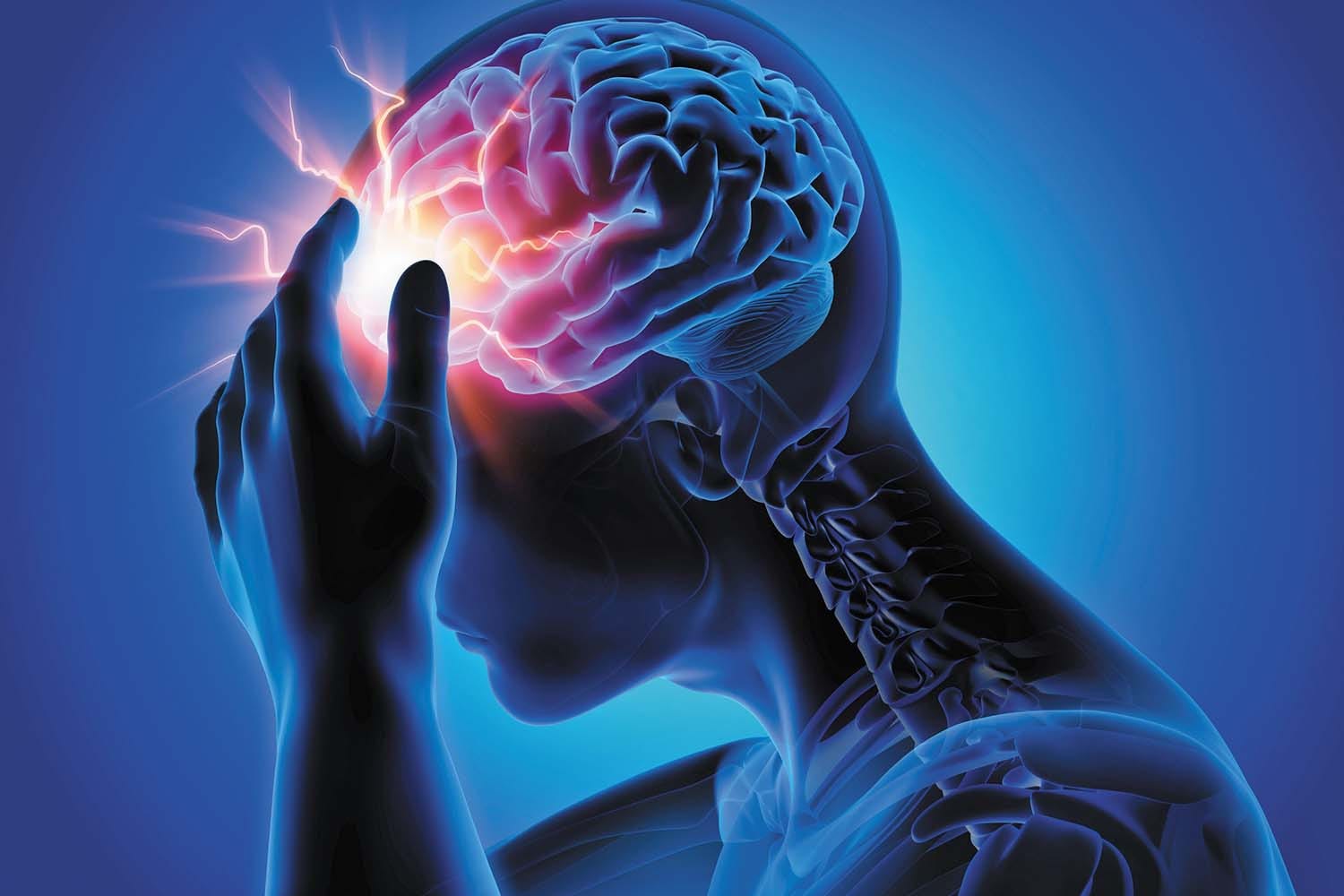
🧠 The Body Doesn’t Work in Isolated Parts
Before anything else, I need to say something that underpins everything here. Your body is not a collection of separate systems working independently of each other. It is one integrated system, and your nervous system is the coordinator.
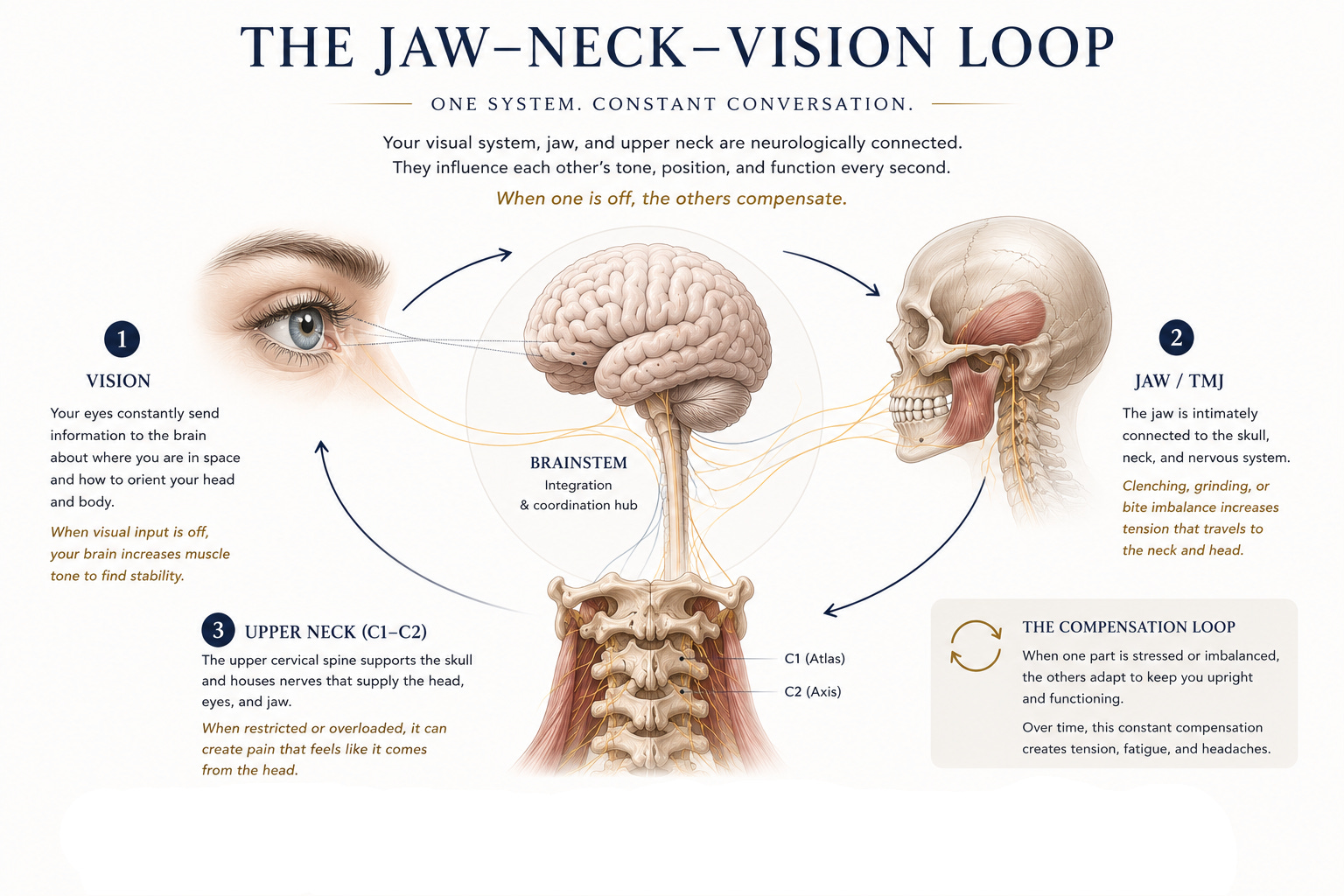
Your jaw, your upper cervical spine, your visual system, and your vestibular system all feed into the same neurological pathways. They share input into the brainstem. They constantly influence each other’s tone, tension, and position. When one of them is struggling, the others compensate. That compensation is almost always where the headache actually lives.
This is why treating a headache as a head problem so rarely works. You are managing the output of the system without ever identifying what is driving it.
😬 What the Jaw Is Actually Doing
The temporomandibular joint sits just in front of each ear and has a direct structural and neurological relationship with the skull, the upper cervical spine, and the nervous system. When there is asymmetry in the bite, chronic tension in the jaw muscles, or habitual clenching and grinding, that tension does not stay local. It travels. It refers. It shows up as pressure behind the eyes, tightness at the temples, and a dull persistent ache at the base of the skull. Symptoms that often get labeled as tension headaches without anyone ever looking at the jaw.
One of the most common patterns I see is people who grind their teeth at night and wake up with a headache. They are told it is stress related. And while stress is part of the picture, what is really happening is that the jaw is working all night to manage an airway that is not fully open and a nervous system that never fully downregulates.
The jaw and the neck are in a constant conversation. When the jaw is forward and braced, the muscles at the base of the skull have to work harder to counterbalance it. Those are the same muscles that, when overloaded, send pain directly into the head.
🔄 Why the Neck Is Never Just the Neck
The upper cervical spine, specifically C1 and C2, has a profound influence on headache patterns that most practitioners underestimate. The nerves exiting this region supply the structures of the skull. Compression or restriction here can generate pain that feels like it originates in the head because functionally, it does.
But neck tension rarely starts in the neck. It is almost always downstream from somewhere else. From a jaw pulling the skull forward. From eyes working overtime to find a stable horizon. From a breathing pattern that keeps the neck and upper chest braced instead of allowing the ribcage to do its job.
When someone comes to me with chronic neck driven headaches, I am not starting at the neck. I am asking what has been loading the neck. What upstream pattern has it been compensating for, possibly for years. Because if you keep treating the neck without answering that question, the neck will keep going back to the same place.
