
Permanent Retainers Are Causing More Problems Than You Think
What permanent retainers do to your jaw, airway, nervous system, and why shifting teeth are a symptom of a bigger problem!

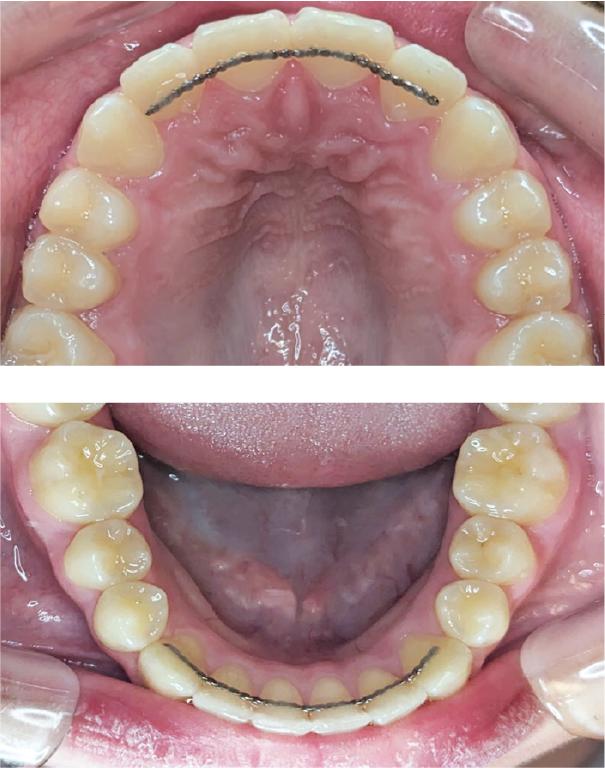
Most people think permanent retainers are harmless. Your braces come off, a wire gets glued behind your teeth, and that is supposed to be the end of the orthodontic process. Straight teeth forever with no additional effort. But permanent retainers quietly influence far more than the position of your front teeth. They affect the way your jaw organizes itself, how your airway behaves at night, where your tongue rests, how your neck supports your head, and how your nervous system maintains balance throughout the entire body.
In my clinic they are one of the most overlooked contributors to jaw pain, clenching, chronic body tension, headaches, visual strain, and even the sense that the body can never fully settle. Many people have no idea their retainer is shaping their system every hour of the day and night.
Teeth Do Not Move Independently
Permanent retainers are marketed as a way to prevent teeth from shifting. The assumption is that if the wire keeps the teeth still, stability is guaranteed. But teeth are not independent structures. They are part of a system that includes tongue posture, swallowing mechanics, cranial motion, ribcage position, diaphragm pressure, airway behavior, visual organization, and nervous system regulation. When you bond a wire behind the teeth, you are essentially telling those teeth to stop participating in the ongoing adjustments that help the rest of the system stay balanced.
In practice this means that the teeth remain still while the rest of the body continues to adapt to stress, breathing patterns, neck tension, bite changes, and cranial shifts. The system still needs to reorganize, but it no longer has access to the micro movements that usually help distribute pressure. Over time that pressure redirects into the jaw joints, the tongue, the airway, or the upper cervical spine. Many people with permanent retainers describe the same pattern: their teeth remain straight, but their symptoms begin to increase. The issue is not alignment. It is that something that used to move is now fixed.
Micro Movement Is a Natural Part of Balance
Healthy teeth make tiny adjustments throughout the day in response to how you breathe, swallow, chew, sleep, and manage pressure through the head and neck. These movements are not a sign of instability. They are part of a dynamic system that is designed to adapt. When a permanent retainer blocks that motion, the body does not stop trying to organize itself. It simply finds other places to absorb the tension.
One of the most overlooked pieces of this conversation is that the cranial bones themselves move with every breath. The vault and base of the cranium subtly widen, narrow, shift, and rotate as the diaphragm descends, the ribs expand, and pressure changes through the airway and sinuses. That rhythmic motion is normal. It helps drain the lymphatic system, regulate pressure in the ears and eyes, and keep the nervous system oriented.
Your teeth are a major part of how the brain interprets those pressure changes. The periodontal ligament is packed with sensory receptors that tell the brain where the jaw is in space and how to coordinate cranial motion with breathing. When the teeth can make small adjustments, the cranial system receives the information it needs to guide those subtle expansions and compressions.
When a permanent retainer stops the teeth from participating in this process, the cranial system loses a key source of sensory feedback. It becomes harder for the head and neck to coordinate with the ribs, the diaphragm, and the airway. This is one of the reasons people begin experiencing symptoms that feel unrelated. A jaw that constantly feels tight. A neck that never fully turns off. Nighttime clenching that suddenly appears. A tongue that feels crowded. Compression around the upper ribs. Headaches that show up without a clear reason. The teeth may look unchanged, but the system underneath is struggling to reorganize around something that is no longer allowed to move.
Look at the cranial bone movement that occurs when you inhale & exhale:
